Sunday, April 22, 2007

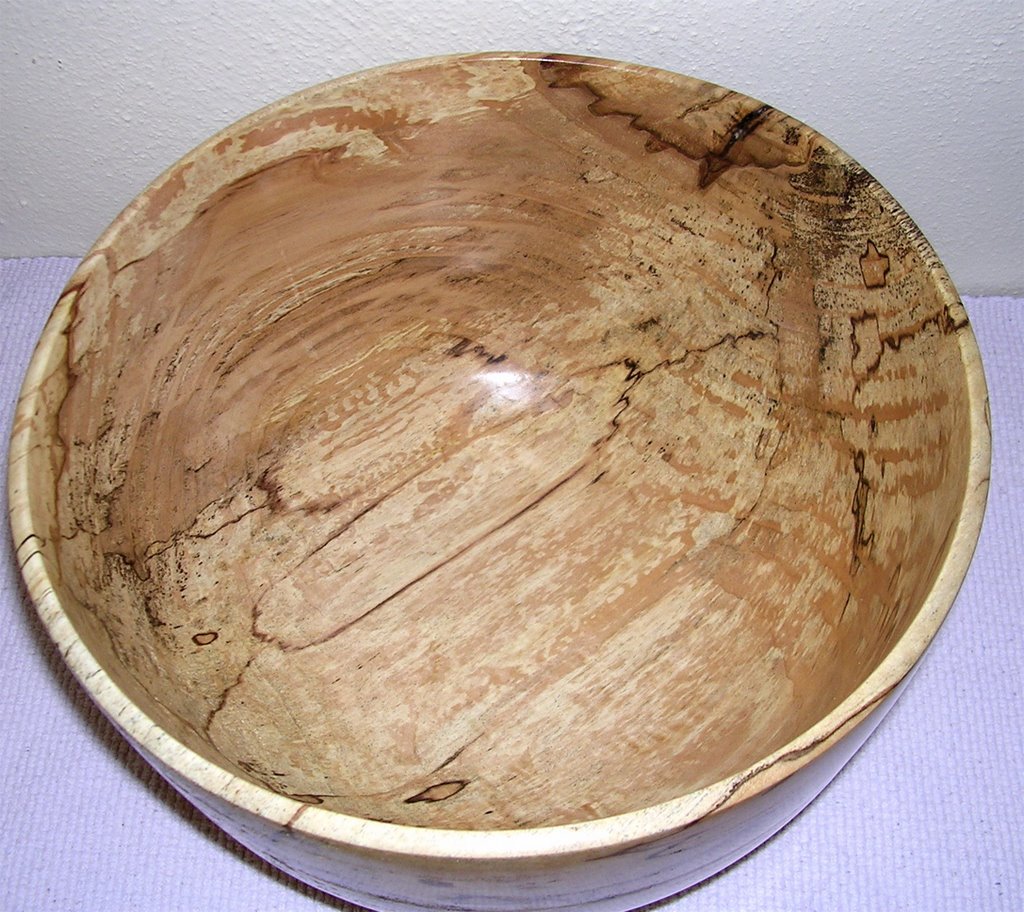
Another honey locust bowl


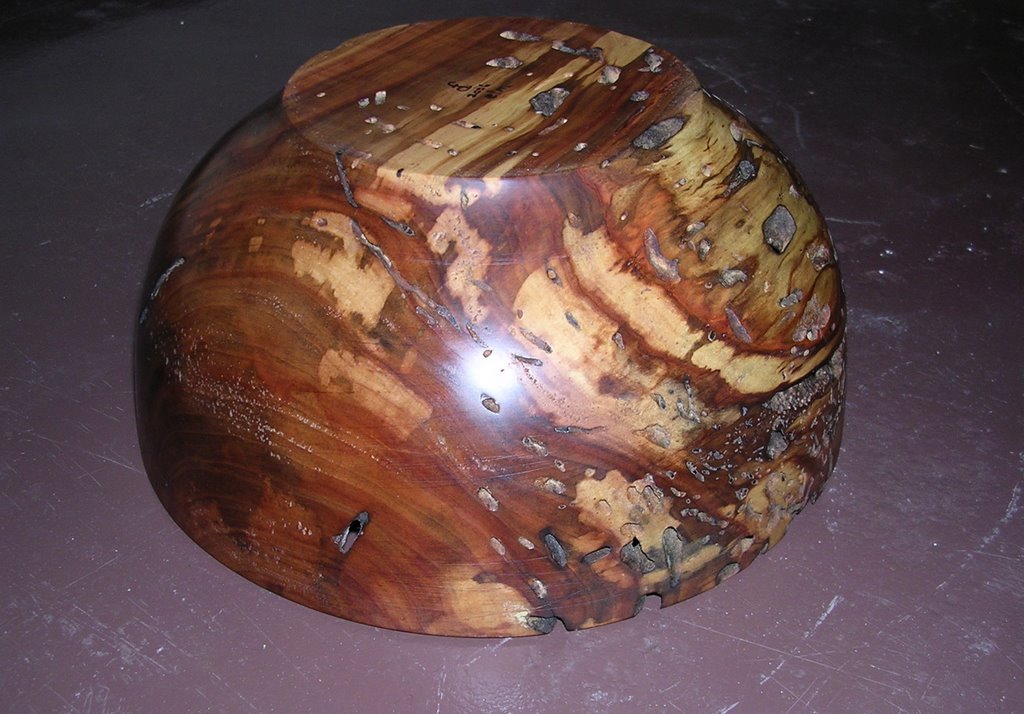
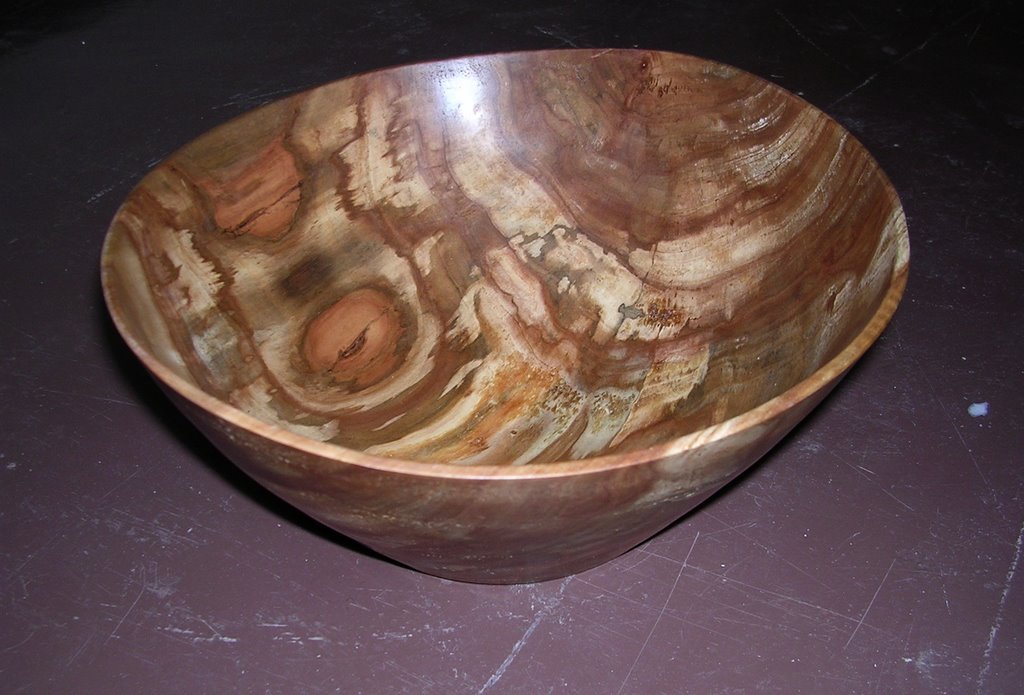
This shallow bowl is 2.5" high and 10.5" across at the rim. I turned it from a piece of honey locust trunk that I won at a club raffle. (I had rough turned it last summer and then finish turned it a couple of weeks ago.) This piece of wood has a lot of nice color variation.

Natural-edged apple vase


This natural-edged apple vase stands 10" high and is 6" in diameter at the rim. The blank was cut from a piece of apple trunk (from a neighbor's firewood pile). The circular bark edge occurred where the tree had (long ago) grown out around the place where a limb had been removed. I tried a number of hollowing tools at a friend's shop in turning the inside (I liked the Rolly Munro Articulated Hollower best and have ordered one for myself). Apple wood turns nicely, but has a tendency to crack - you can use a lot of CA glue! This piece had a lot of nice color, grain and figure in it. (Sold at October Open Studio event.)

Wednesday, March 07, 2007

Bowl-bottomed Mandolin

The challenge for our March 2007 Badger Woodturners' meeting was to create a musical instrument incorporating wood turning. I had turned a maple bowl from green wood, which had taken on a slightly oval but symmetrical shape as it dried, and decided to try using it as the base for constructing a mandolin. I consulted with a local guitar store, researched some books on building musical instruments, obtained some parts, and went to work. To simplify this first project, I decided to go with only four strings instead of the typical eight. I did not have enough time to send away for fret wire, so the fingerboard is currently fretless. (I hope to change that in the near future.) The resulting instrument is pictured below. It actually sounds pretty good, although it is very difficult to finger chords without frets (at least for me). And, I was fortunate enough to win the March challenge!


Thursday, February 22, 2007

Honey locust bowl

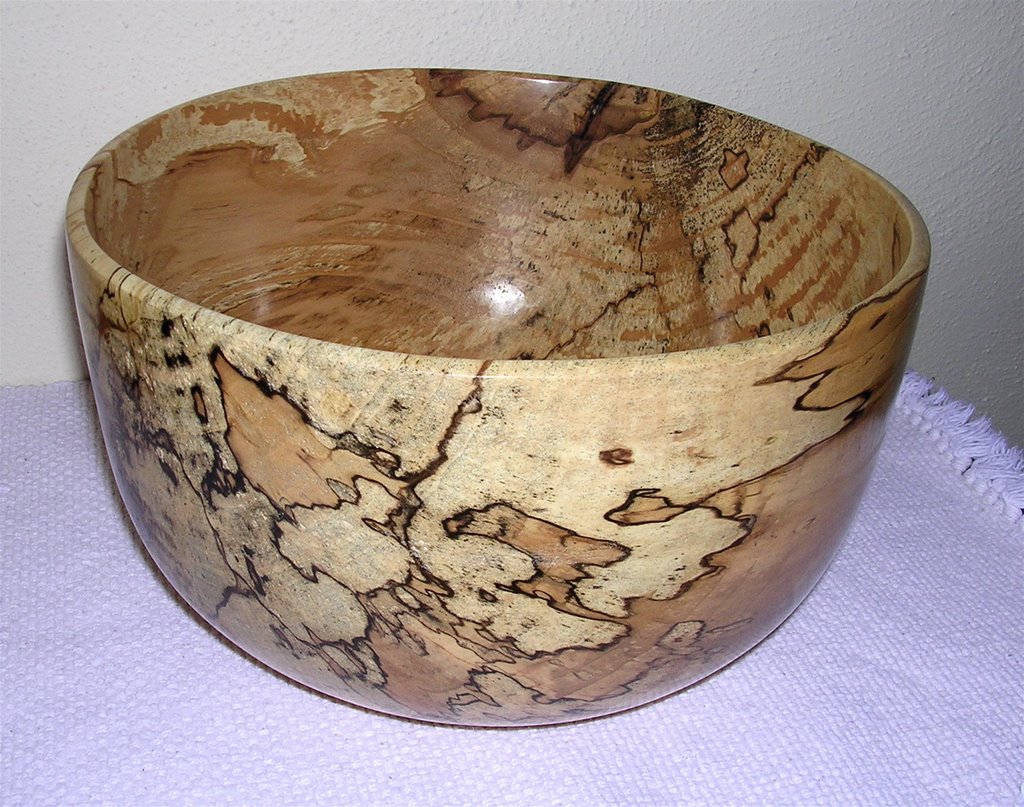
At a meeting last year I acquired a couple of chunks of honey locust, which I cut in half and then rough turned (to about 1.25" thick) and then let dry that way for about nine months. I recently finish-turned one of them, which turned out pretty nicely, I think. It is about 9.25"D x 4"H.


Small birch bowl

I turned this small (6"D x 3.5"H) birch bowl from a piece of birch I won in a raffle at our last woodturners' meeting. It has some nice figure, some dramatic spalting, and a branch which grew out near what is now the bottom of the bowl.


Sunday, December 17, 2006

Spalted Elm Bowls

These bowls were turned from some elm wood that had been sitting around for quite a while. One piece had a lot of worm holes in it. Each is about 10" in diameter and 4 1/2" in height.


More Cherry Bowls

Here are two cherry bowls that I turned from a limb from a tree a neighbor took down in his back yard. Each is about 10" in diameter and 3" in height. These bowls were turned green, and one reflects the natural distortions which sometimes occur as the wood then dries.


Goblets

Here are two somewhat different goblets that I turned this Fall. The larger, dark colored one (walnut and cherry), is a chalice I turned for the 10th anniversary celebration of a friend's ordination as a Lutheran minister. The photo was taken in her home. The other goblet was turned from a piece of a maple branch that had another branch growing out of it.


Castle Spinning Wheel

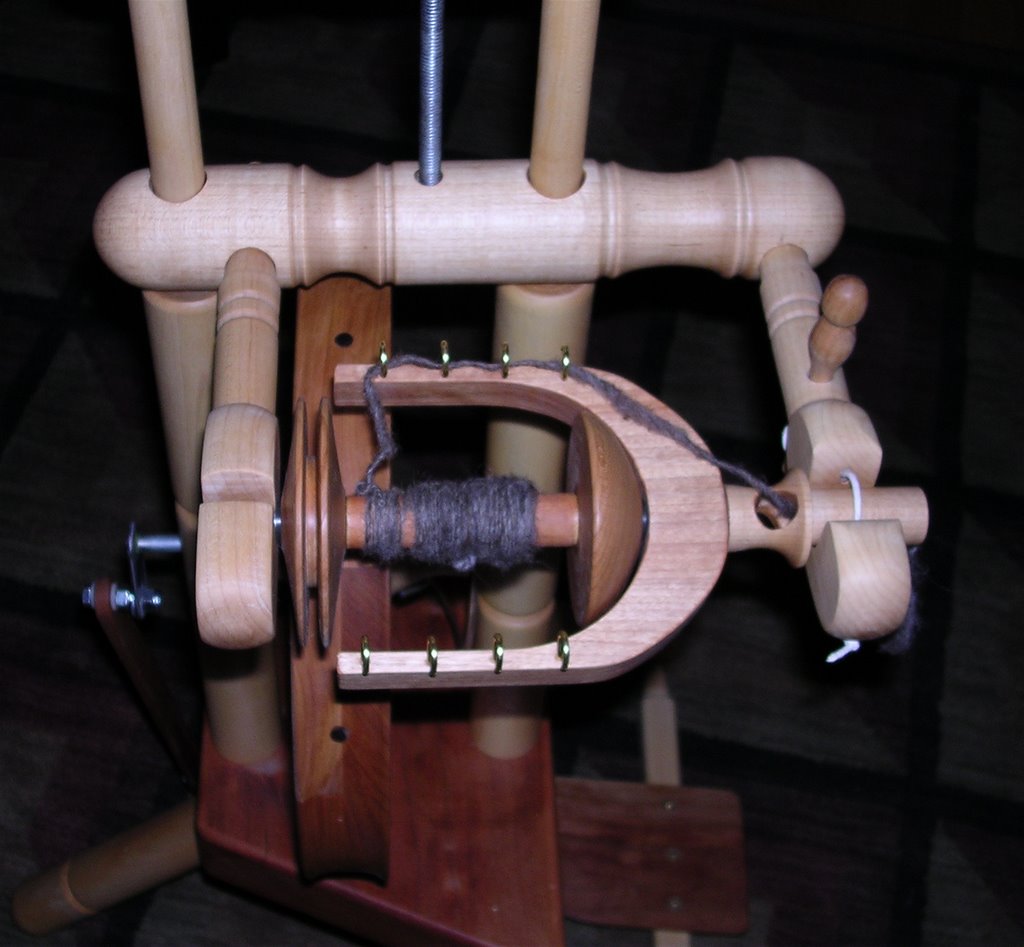
It's been a while since I've posted any new photos, and while I've turned a variety of items since my last post, I thought I'd start off here with my most recent project, a small castle-style spinning wheel (including three bobbins and a Lazy Kate). Construction of this spinning wheel involved both wood turning and woodworking techniques. Basically, everything in the photos that is round saw some time on the lathe - including the drive wheel, which was on the lathe for three separate steps. Remarkably, the spinning wheel actually spins fiber quite well. The wheel is made principally from cherry, hard maple, and red birch.


Wednesday, March 08, 2006

Large spalted maple bowl


Spalted maple is often very beautiful. The trick is to show it off to best advantage. The spalting in this particular piece of wood made that easy! 5.75"H x 10"D.

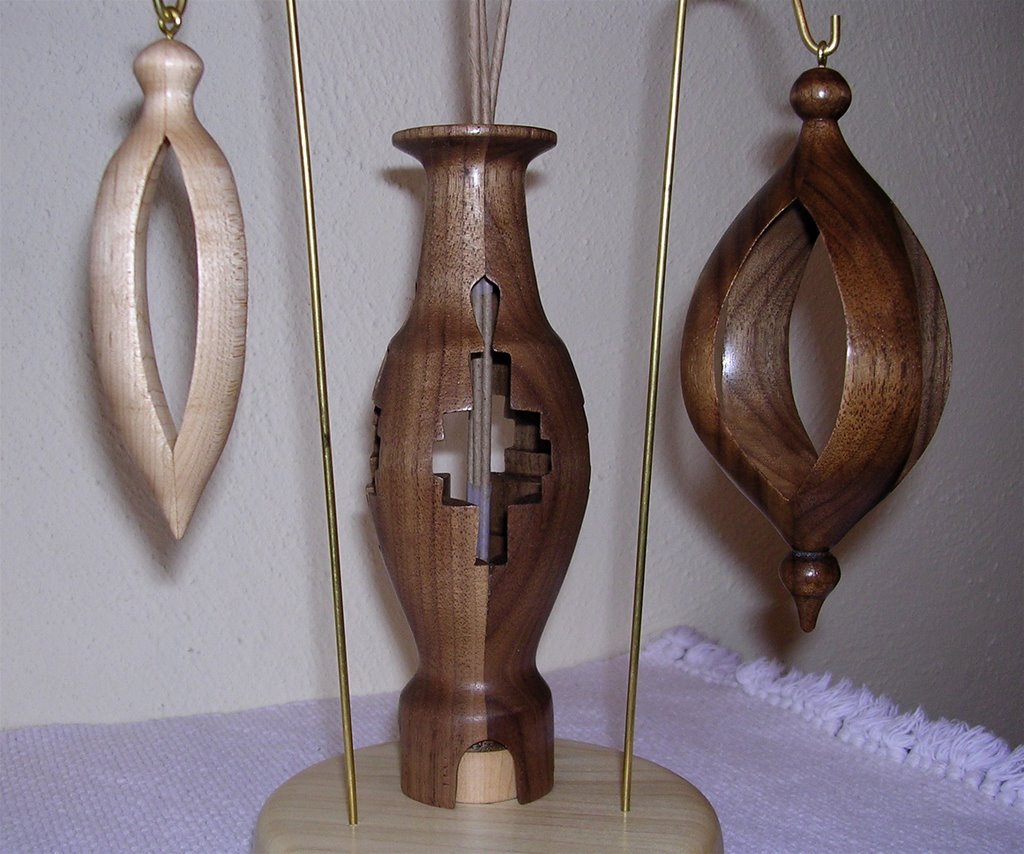
Inside-Out Ornaments and Vase


I made these for this month's "challenge" at our woodturners' group. The ornaments are maple (4.5"H x 1.5"D) and walnut (5.5"H x 2.5"D). The vase is also walnut (7.5"H x 2.5"D). The flowers are dried daisies. But how do you create the open space inside the objects? The title gives a hint - sort of.

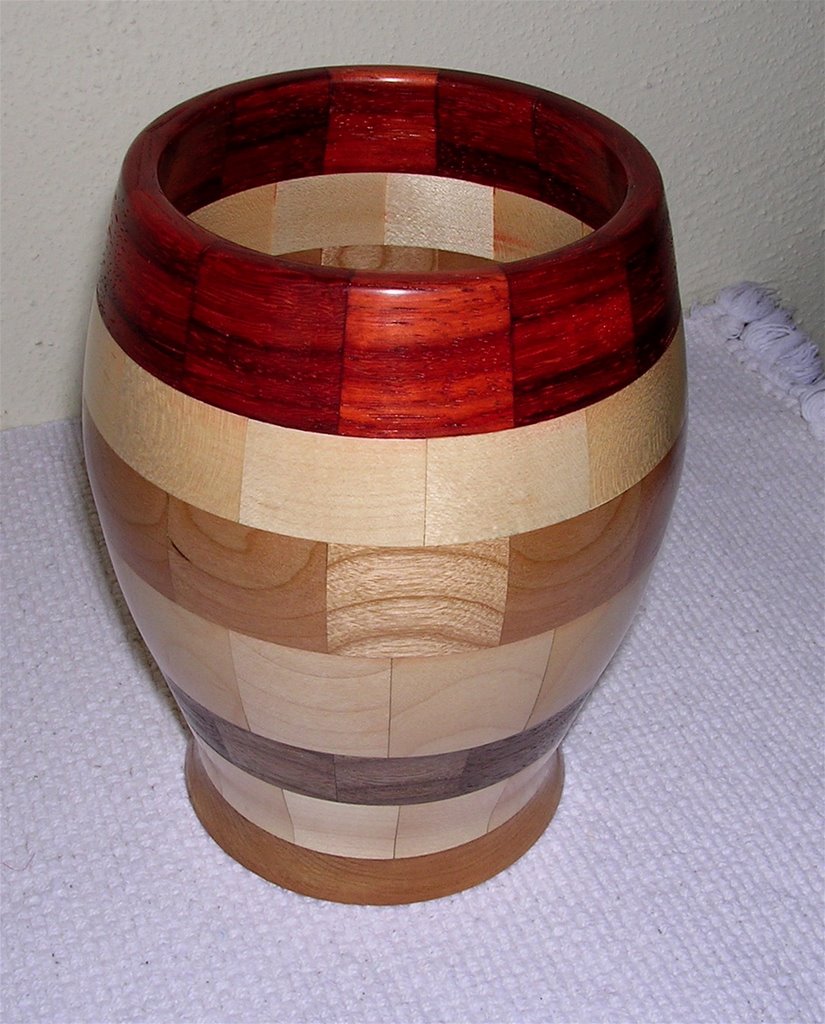
Segmented vase


This vase or urn is composed of six rings, each containing twelve identical segments, plus a disk for the foot - 73 pieces of wood altogether! The woods from the top down are padauk, maple, cherry, maple, walnut, maple and cherry. It measures 6"H x 4.5"D. The small pieces comprising a ring are cut on a "sled" on my table saw so that each piece in the ring is of identical size and all pieces are cut at exactly a 15 degree angle at both ends. The pieces are then glued together to form the ring, and the rings are then glued together to form the rough shape to be turned. Then the vase is turned, inside and out. (There are a couple of tricks along the way....)

Wednesday, February 01, 2006

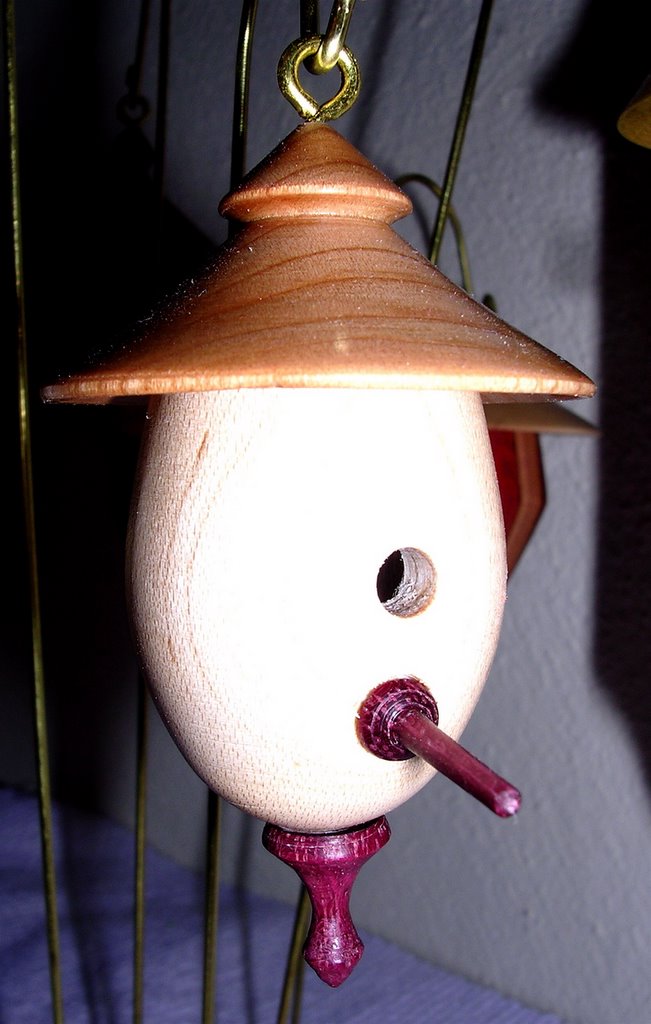
Miniature Birdhouses

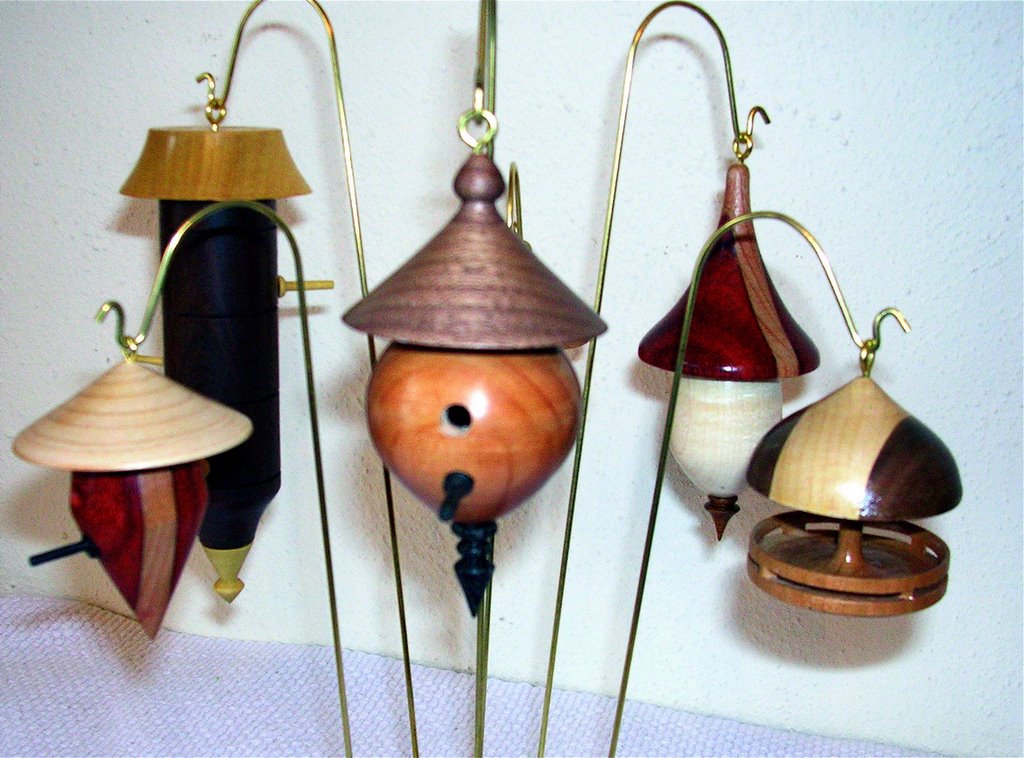
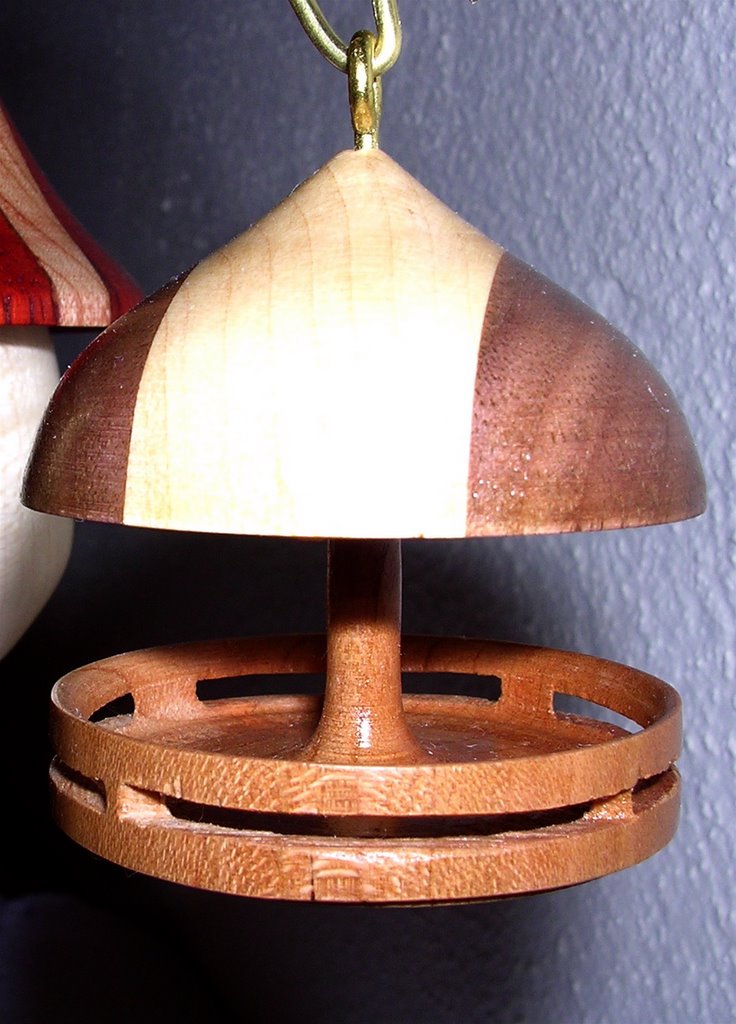
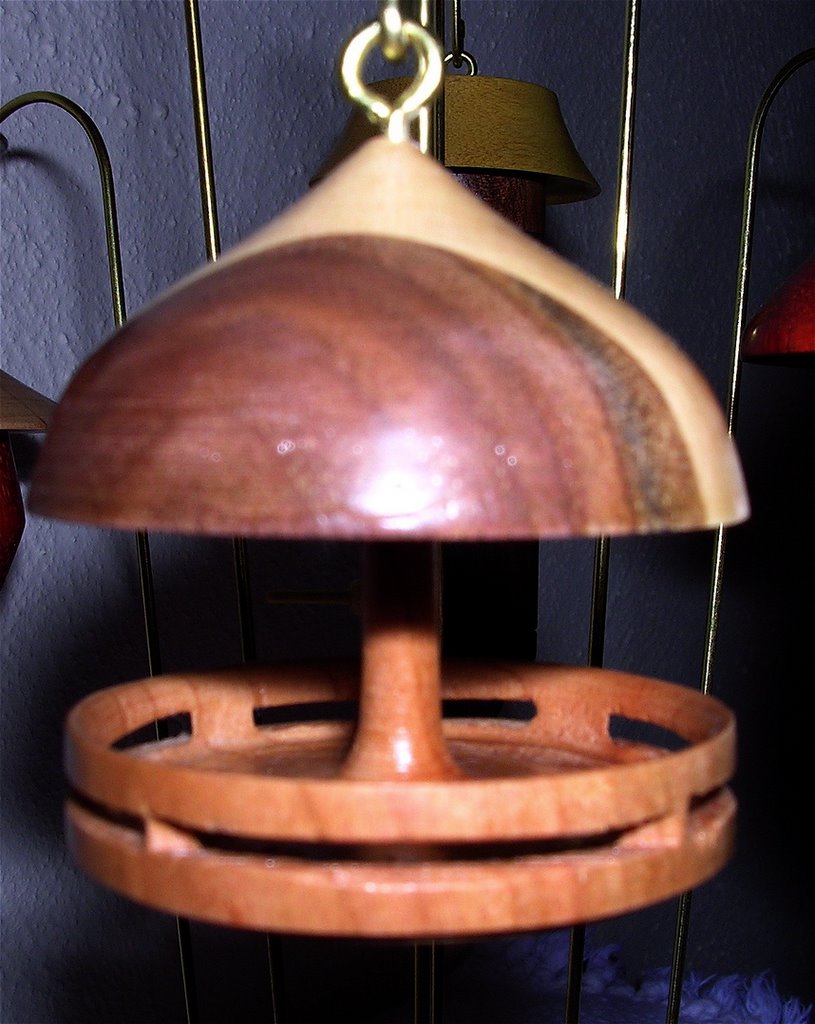
Here are a group of miniature birdhouses that I turned as part of a "challenge" in our woodturners' club. We typically have a demonstration of a particular type of turning or project at our monthly meeting, and the next month try to produce the project on our own. These are the first birdhouses I have tried; it's actually a lot of fun to do. The sizes range from 1.75" x 1.75" (the little feeder) to 1.75" x 5.25" (the 3-level condominium).


Tuesday, January 10, 2006

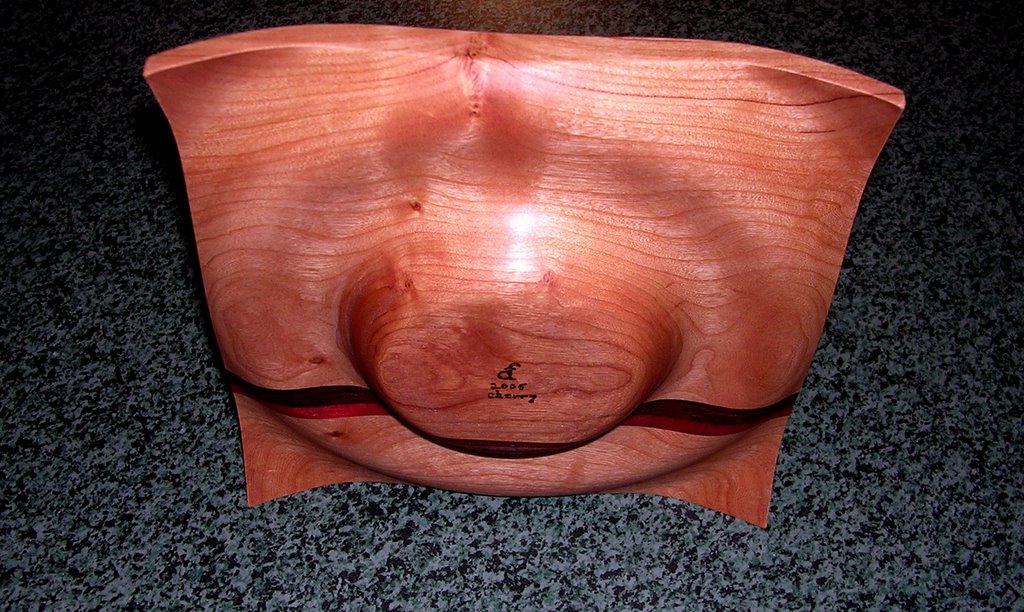
A second - even more different - square bowl


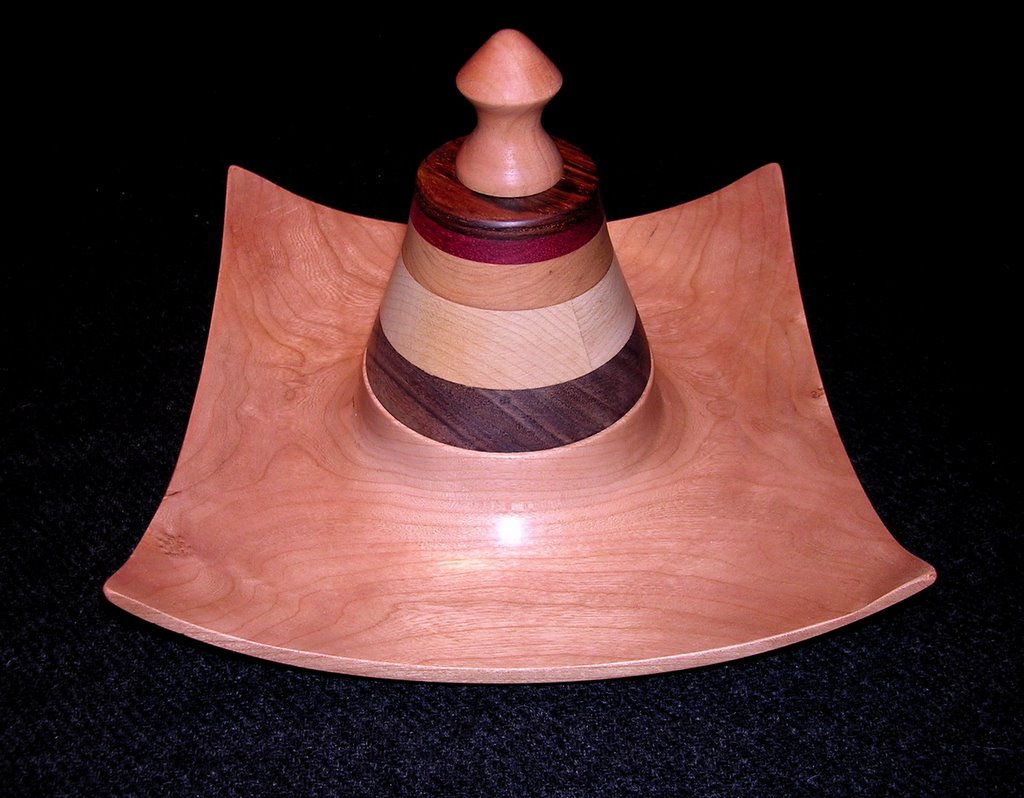
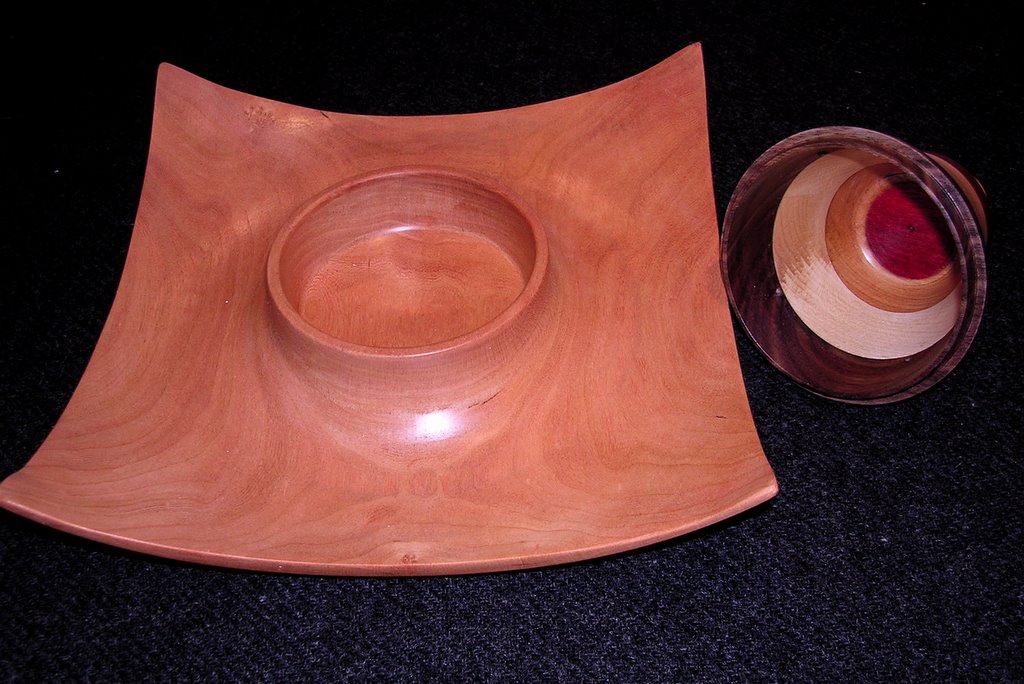
Here's another cherry bowl turned using the "flying corners" approach (see preceding post). I didn't find the shape of this one particularly attractive when I was done, so I glued up and turned the multi-colored cap from some scraps (from the bottom up: walnut, maple, cherry, bloodwood, and cocobolo; the knob is cherry). The result is certainly unusual, whatever else you may think of it! It measures 8" from side to side; the center "dish" is about 3.5" across.

Another - very different - square bowl


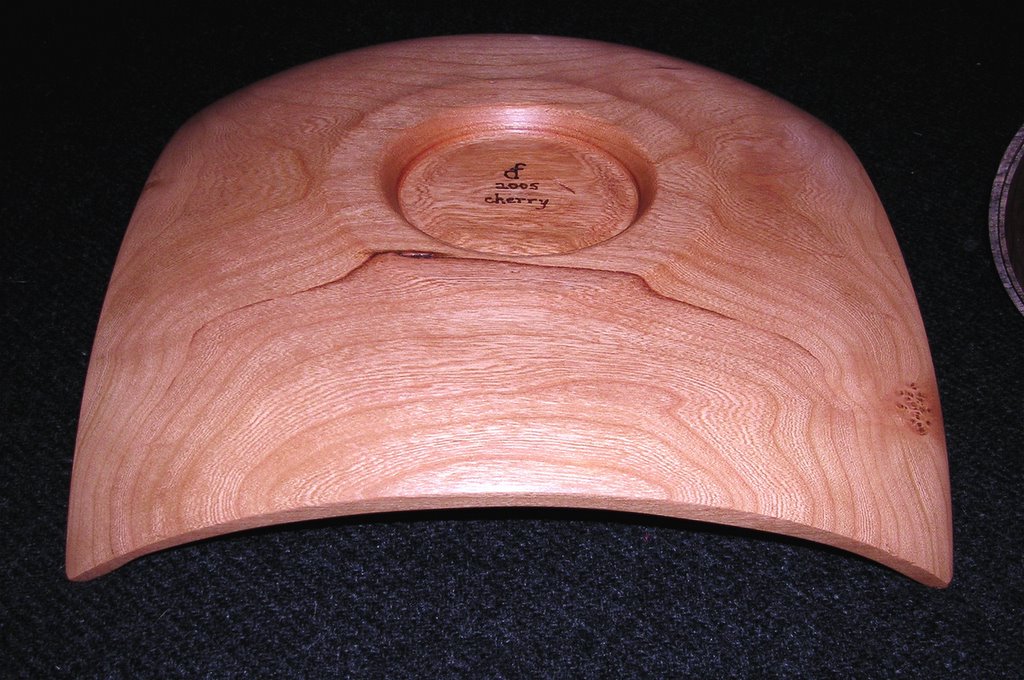
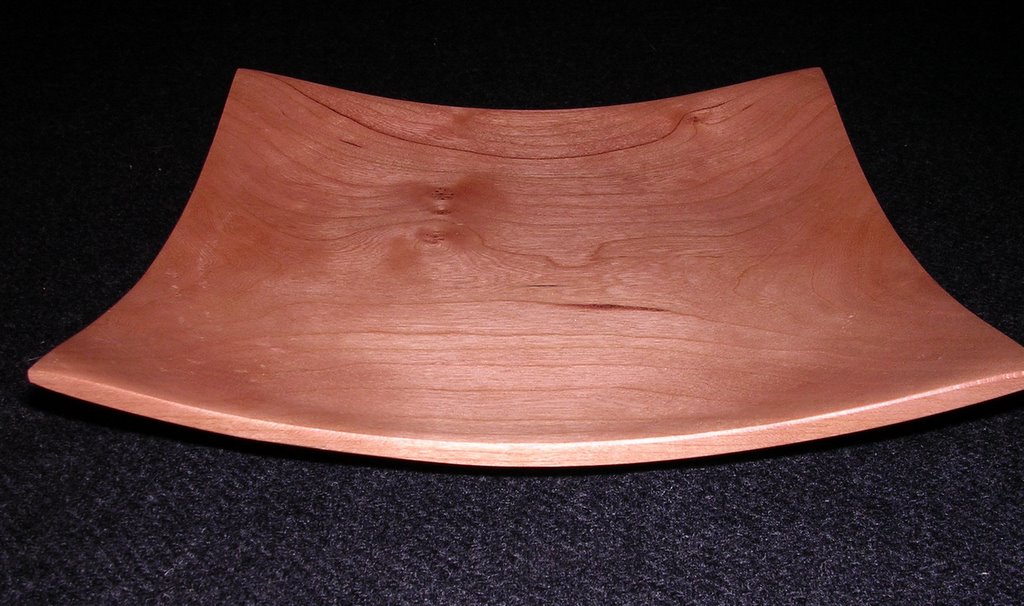
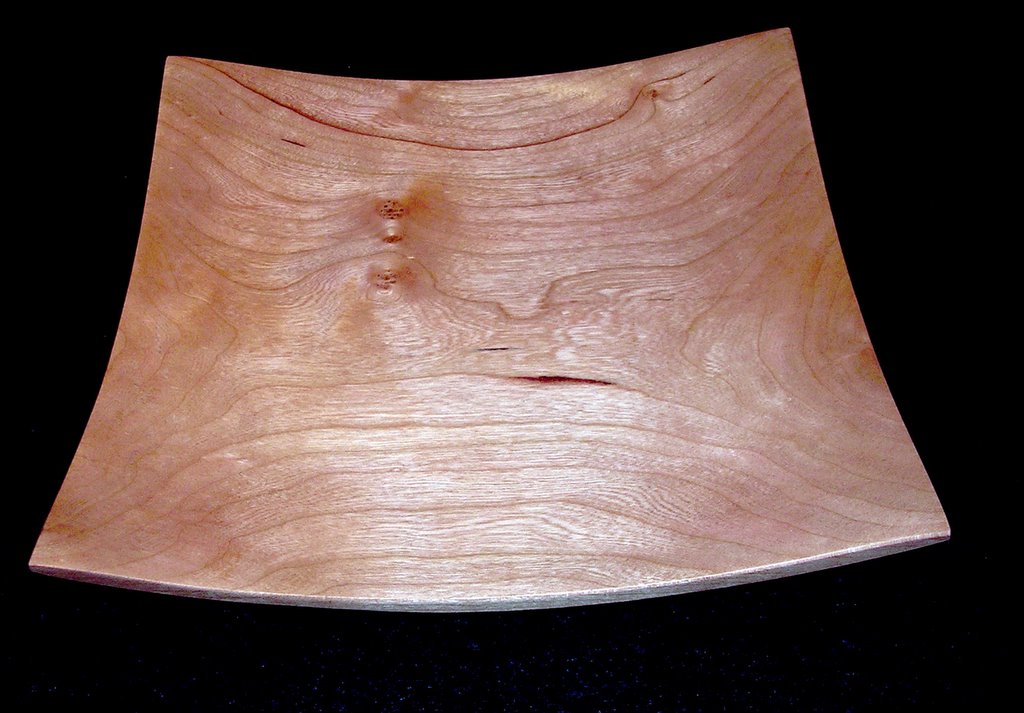
The square bowls in the last (Dec. 18) posting were turned using a technique in which scrap pieces are added to the sides of a square blank, and this larger blank then bandsawed round. The bowl is then turned, as if the scrap pieces were the edges of a round bowl. When that is done, the scrap pieces are bandsawed off, leaving a bowl with straight sides. This bowl, however, was turned with just the square blank mounted in the lathe - so there were sharp, flying corners for the entire turning. Tends to focus one's attention. This bowl was turned from 8/4 cherry, and measures about 8.5" from side-to-side.

Sunday, December 18, 2005

Square bowls


These two bowls are made from cherry; the stripes are bloodwood (red) and cocobolo (brown). There are at least two ways to turn square bowls, but for now you'll just have to speculate. I gave one of these to my father for his 90th birthday.

Thursday, December 08, 2005

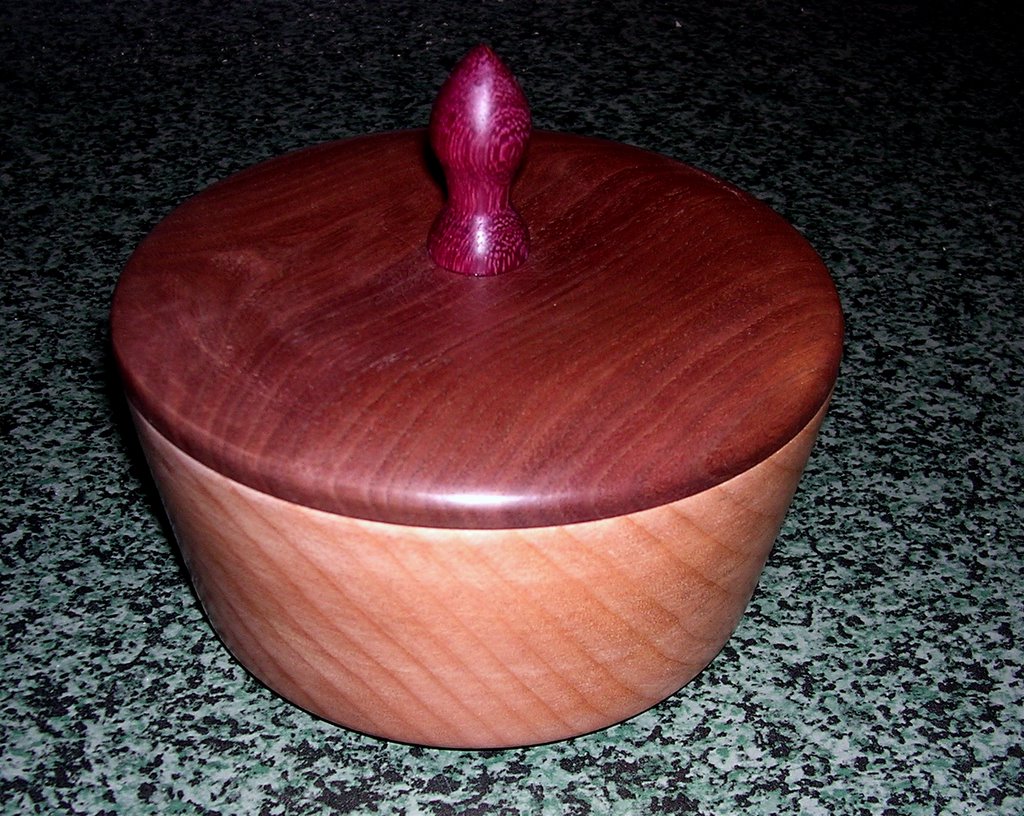
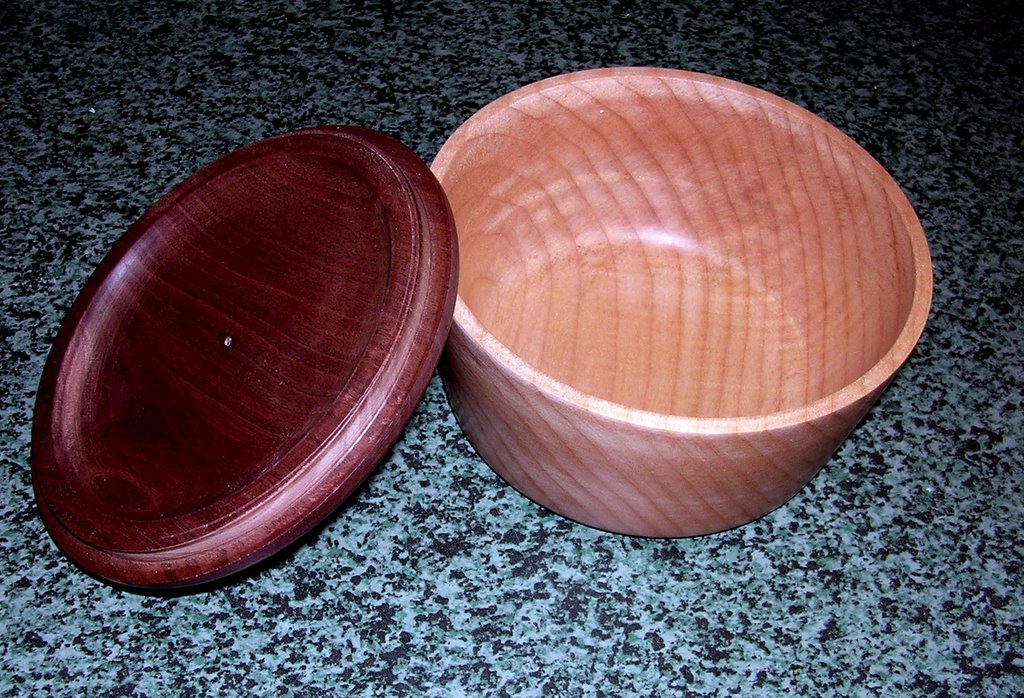
Curly maple bowl with lid


I turned this bowl from curly maple. I then turned the lid from walnut, and cut a rabbet on the under side of the rim of the lid to fit into the base. Finally, I turned the knob from purpleheart.