


This small apple wood bowl was turned from the same piece of wood as the "Natural-edged apple vase" posted on May 9. In chain-sawing the log, however, I had sliced off a small section of what would become the rim of the bowl, so I decided to try some InLace to fill the gap. The InLace material is described in "Large cherry bowl with InLace," also posted on May 9. I also turned the bottom of this bowl completely round, and then created the lttle InLace "stand" for it to sit in. This bowl measures about 7" in diameter by 2" high.


The piece of cherry burl from which this bowl was turned had several very deep bark inclusions. They were too unstable to keep intact, so I just turned them out as the bowl developed into this interesting shape. It was necessary to add a piece of cherry to make the base, since the foot of the burl turned out to be too small and irregular to support the piece solidly. The bowl measures about 9.5" across and 3" high. (Christmas gift to brother and sister-in-law.)


I turned this small platter from a slab of birch acquired at a meeting of my woodturning club. It measures 9" across and is 1.5" high at he rim. (Gift at Badger Woodturners' Holiday Party gift exchange.)


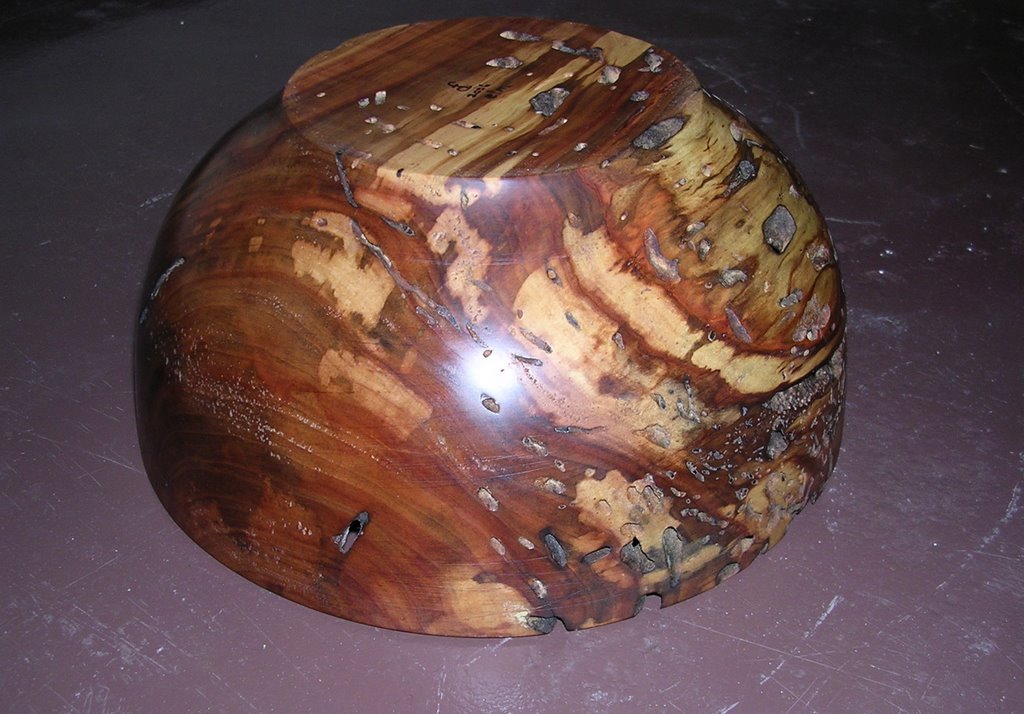
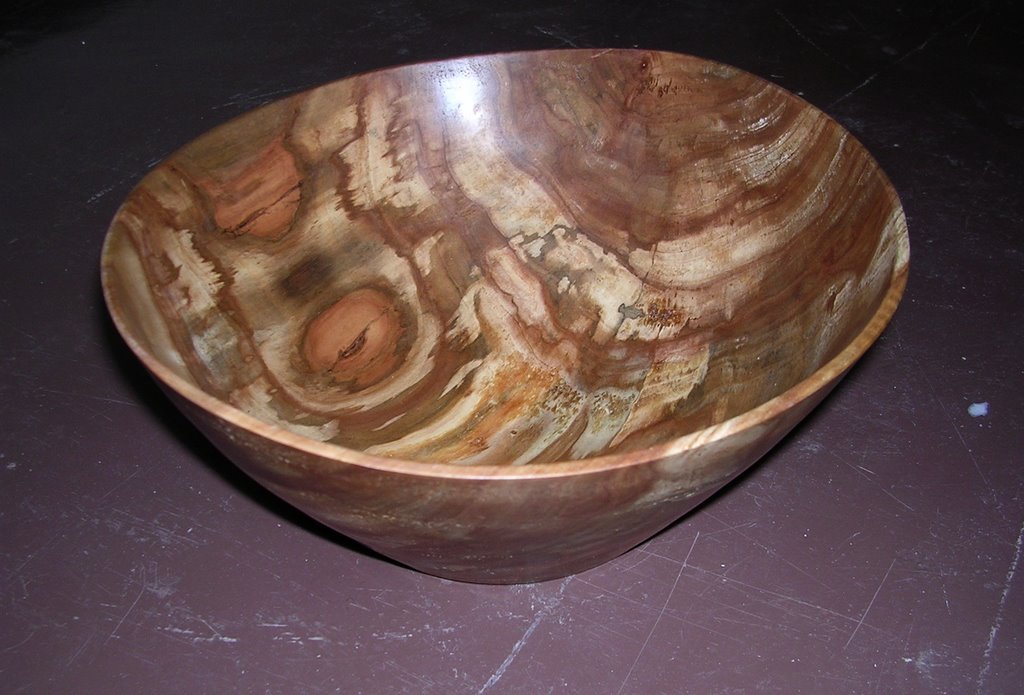
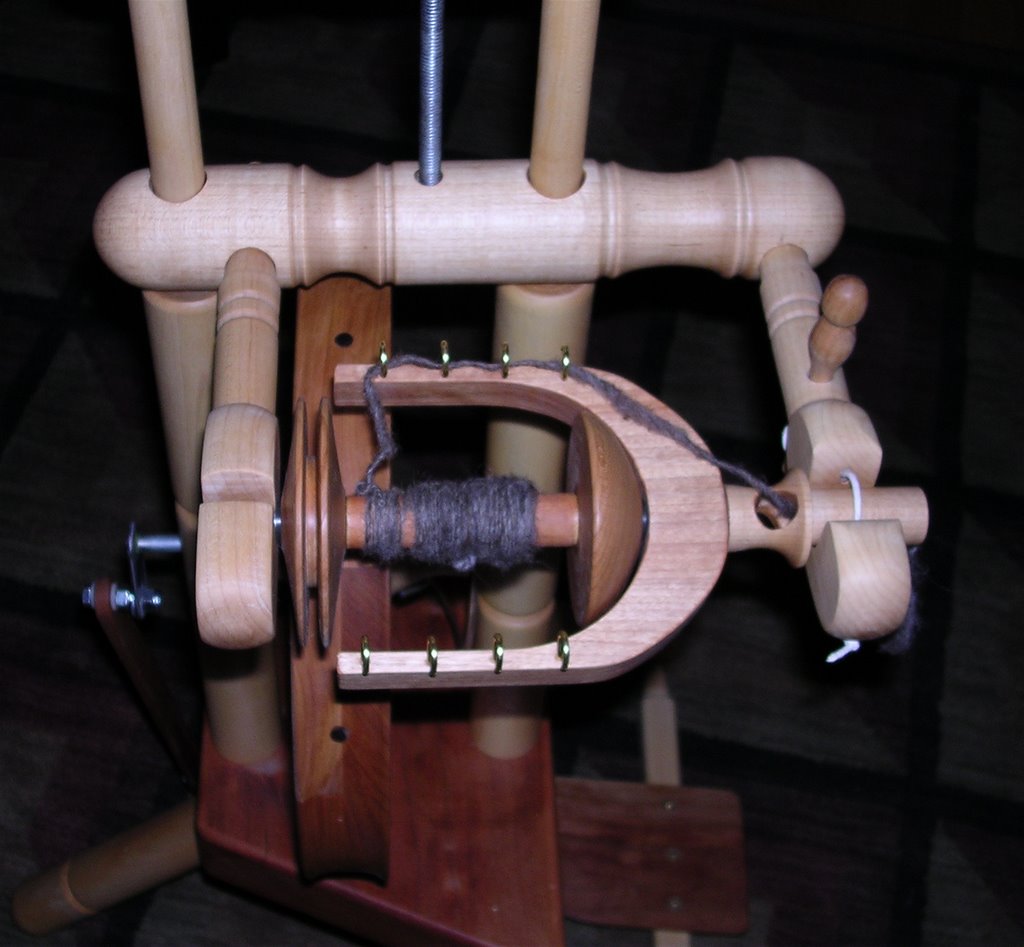
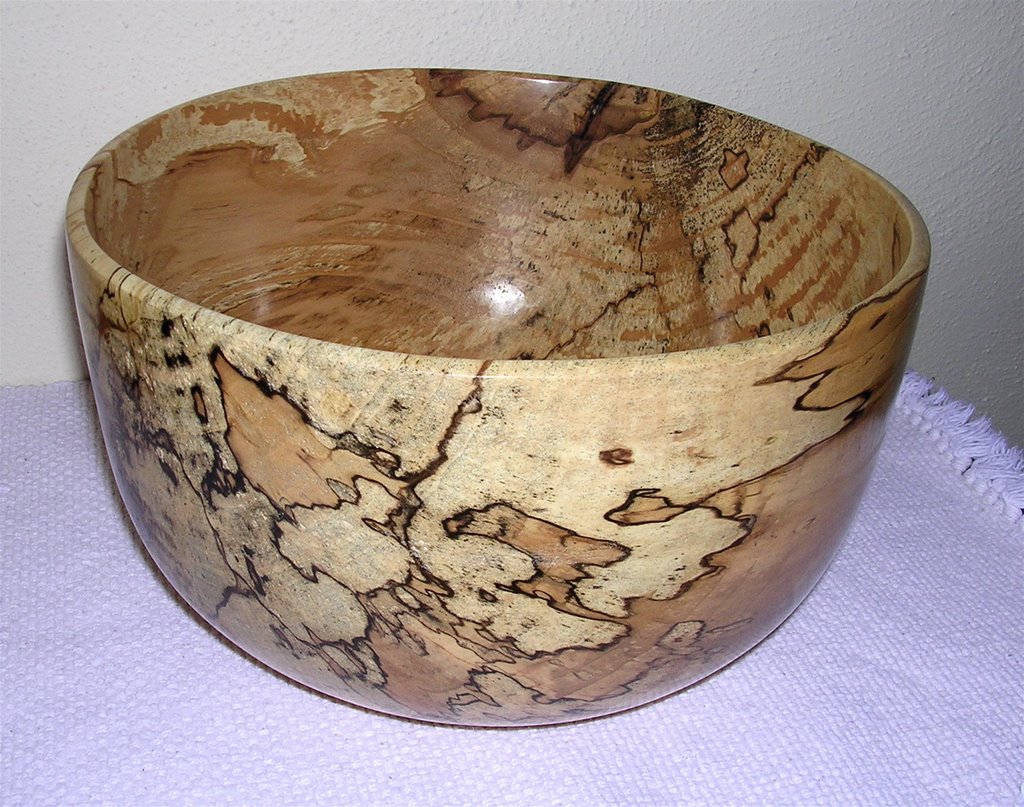
This cherry bowl measures about 12.5" across and is 3.25" high. The wood came from the trunk of a tree one of our former neighbors took down. When I was turning the inside of the bowl I discovered a hidden bark inclusion that turned out to be not only large but quite unstable. I removed all the bark and filled the space with InLace, a liquid resin inlay material that comes in many colors, and also in a clear version to which specal dyes may be added. (I used the clear material with copper dye.) It dries very hard and may be sanded and polished. I liked the effect, and am planning to try InLace in other project applications. The fourth (bottom) photo shows the InLace inlay in close up; the third photo shows where the InLace carries through to the bottom of the bowl. (Christmas gift to brother and sister-in-law.)


This shallow bowl is 2.5" high and 10.5" across at the rim. I turned it from a piece of honey locust trunk that I won at a club raffle. (I had rough turned it last summer and then finish turned it a couple of weeks ago.) This piece of wood has a lot of nice color variation.


This natural-edged apple vase stands 10" high and is 6" in diameter at the rim. The blank was cut from a piece of apple trunk (from a neighbor's firewood pile). The circular bark edge occurred where the tree had (long ago) grown out around the place where a limb had been removed. I tried a number of hollowing tools at a friend's shop in turning the inside (I liked the Rolly Munro Articulated Hollower best and have ordered one for myself). Apple wood turns nicely, but has a tendency to crack - you can use a lot of CA glue! This piece had a lot of nice color, grain and figure in it. (Sold at October Open Studio event.)
The challenge for our March 2007 Badger Woodturners' meeting was to create a musical instrument incorporating wood turning. I had turned a maple bowl from green wood, which had taken on a slightly oval but symmetrical shape as it dried, and decided to try using it as the base for constructing a mandolin. I consulted with a local guitar store, researched some books on building musical instruments, obtained some parts, and went to work. To simplify this first project, I decided to go with only four strings instead of the typical eight. I did not have enough time to send away for fret wire, so the fingerboard is currently fretless. (I hope to change that in the near future.) The resulting instrument is pictured below. It actually sounds pretty good, although it is very difficult to finger chords without frets (at least for me). And, I was fortunate enough to win the March challenge!





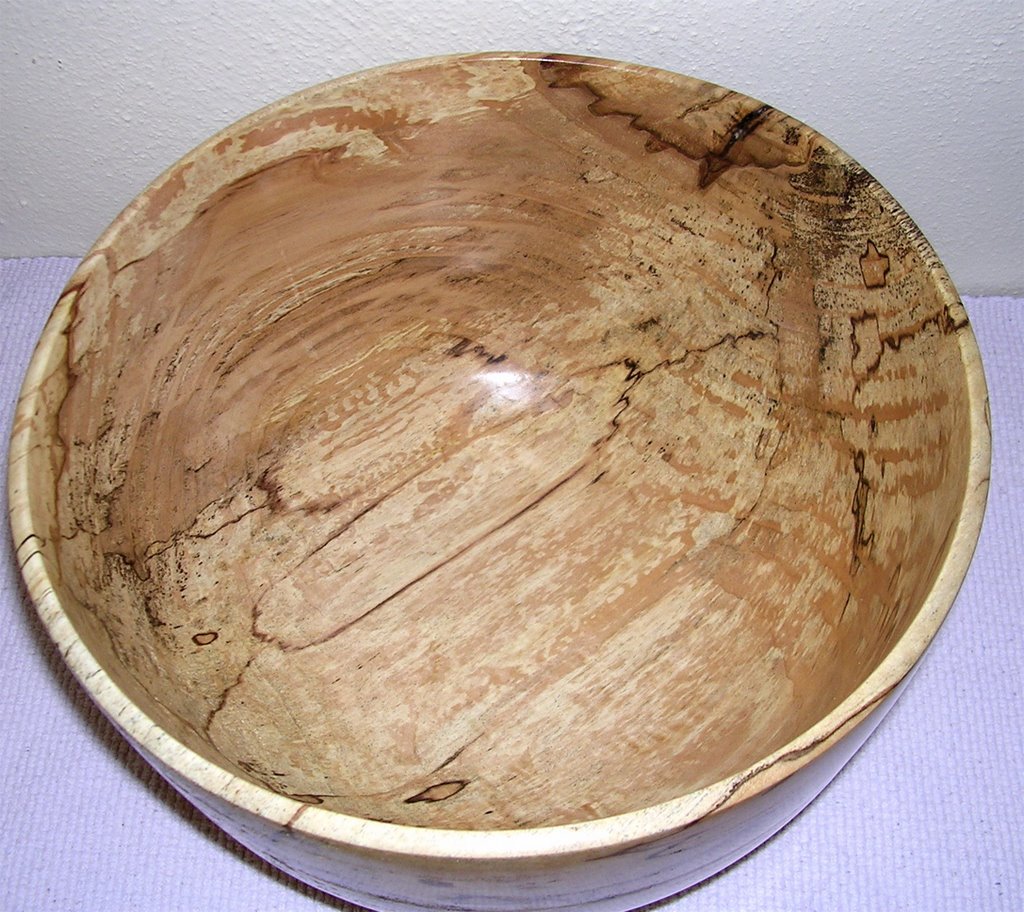

Spalted maple is often very beautiful. The trick is to show it off to best advantage. The spalting in this particular piece of wood made that easy! 5.75"H x 10"D.

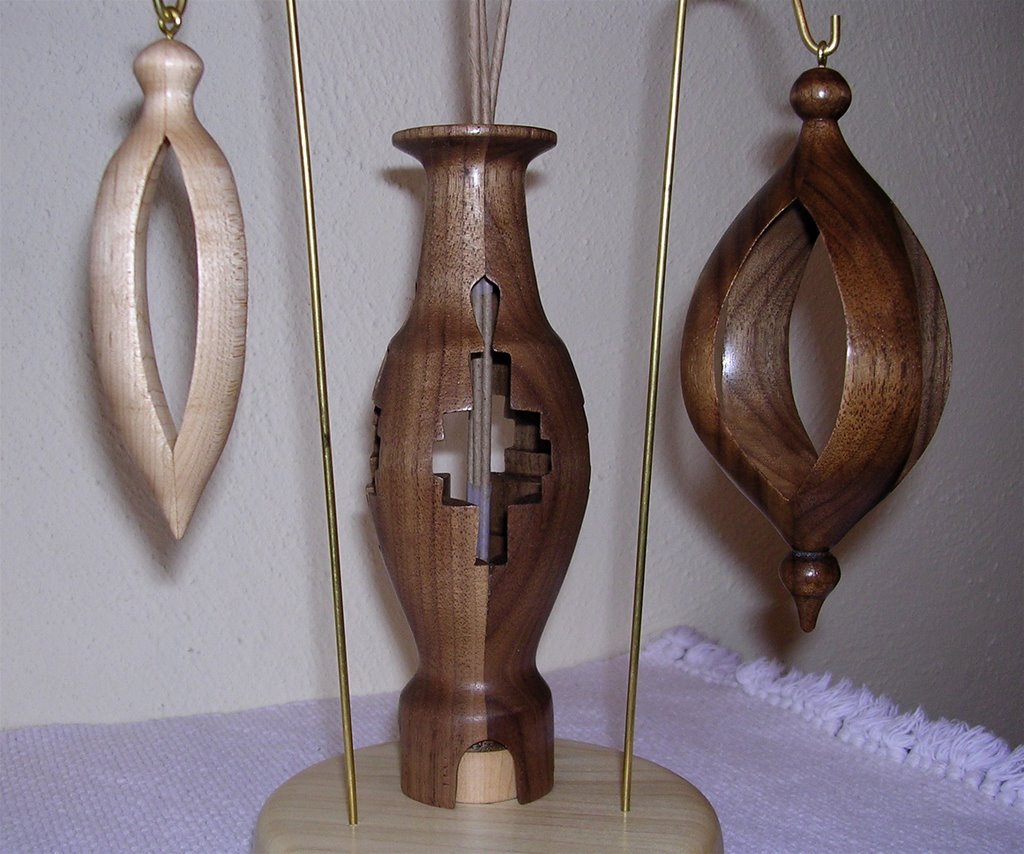
I made these for this month's "challenge" at our woodturners' group. The ornaments are maple (4.5"H x 1.5"D) and walnut (5.5"H x 2.5"D). The vase is also walnut (7.5"H x 2.5"D). The flowers are dried daisies. But how do you create the open space inside the objects? The title gives a hint - sort of.
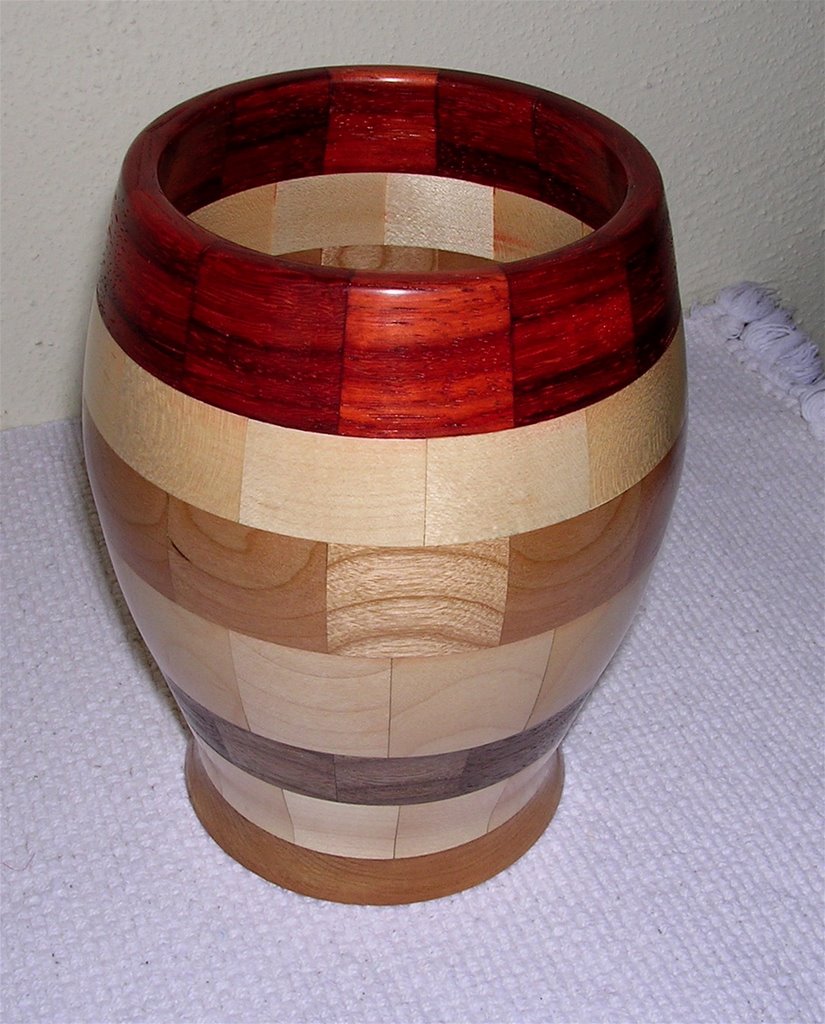

This vase or urn is composed of six rings, each containing twelve identical segments, plus a disk for the foot - 73 pieces of wood altogether! The woods from the top down are padauk, maple, cherry, maple, walnut, maple and cherry. It measures 6"H x 4.5"D. The small pieces comprising a ring are cut on a "sled" on my table saw so that each piece in the ring is of identical size and all pieces are cut at exactly a 15 degree angle at both ends. The pieces are then glued together to form the ring, and the rings are then glued together to form the rough shape to be turned. Then the vase is turned, inside and out. (There are a couple of tricks along the way....)